Despite the survey, I'm middle class - really

BrokeThere is suddenly a great deal of interest in class, following publicity about the new online class survey, which suggests that the traditional class demarcations (upper, middle, working) should give way to seven - from the elite to the precariat.

I'm not sure about this.  I did the survey myself and discovered that I am 'traditional working class'.  This really isn't the case: I could imagine being in the precariat - I am self-employed - but traditional working class, no.  I might like to be, but I'm not.

The odd thing was that my father did the same survey and it came to the same conclusion about him.  I suspect that the survey has two big problems:

1.  It puts far too much emphasis on income.
2.  It takes no account of upbringing.

I was definitely brought up as middle class, including dancing classes and piano classes, not to mention private school and Oxford.  I may not earn  much, but one of the traditional characteristics of the middle classes is supposed to be their ability to defer gratification.  I admit, I have deferred it indefinitely to be a writer, but I am still middle class...

Professor Mike Savage, the acknowledged national authority on class, was involved in the survey, but I think his previous nomenclature - professional, intermediate, working - and based largely on culture, is a more accurate portrayal.  His original BBC survey was based on classifications which divided  people according to what aspects of culture they enjoyed, into professional classes (hardly ever watch TV), the intermediate class (which would be the professional class except that it shares a much lower life expectancy with the working classes), and the working class (watches four times as much TV as the professional class, but never goes to musicals).

This nomenclature slightly muddies the water, because 29 per cent of all three classes still go to the pub once a week. But yes it does omit the emergence of the new class, the international One Per Cent that is hoovering up the money from the middle classes, and here is the main point.

For one thing, the new classification 'elite' doesn't capture this.  For one thing, those earning over £100,000 are actually far less than one per cent.  These are not a class, they are a throwback to the old aristocratic privileges for a tiny minority who push up the prices for the rest of us.

For another thing, the impact this has on the middle classes seems to have passed the survey by.  It means that, perhaps more than any other time in their history, the middle classes are struggling to get by - from those on higher than average earnings right down to the public sector middle classes, running big nursery schools on £17,000 a year.

Does that make them 'traditional working class'?  I don't think so.  It just makes them struggling middle class.
 
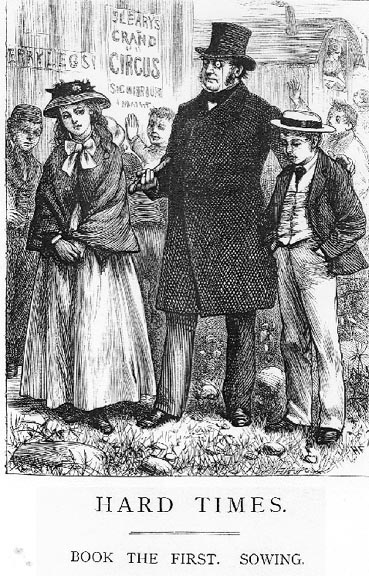
It so happens that my new book about the middle classes, and whether they can survive another generation - the chances are against, I fear - is coming out in three weeks time (picture above).  The full truth will then be revealed...
The IT recipe for failure

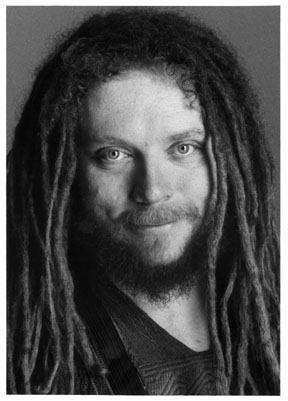
Jaron Lanier is one of my heroes.  He has dreadlocks, is an accomplished digital musician and pioneer of virtual reality, and his book You Are Not a Gadget describes the development of what he calls digital Maoism, where web users become a new proletariat toiling for the benefit of an all-powerful virtual bourgeoisie. “We're sending them to peasanthood, very much like the Maoists have,” he wrote.

Lanier’s target has been the idea that individual creativity is being undermined by the internet, partly because so few people seem prepared to pay for it – I speak as a writer – and partly because the prophets of a digital future are toiling towards a day when there will be no individual books, pictures or musical compositions; just one ‘mashed’ whole.

That was the idea behind Kevin Kelly’s predictions in the New York Times in 2006, and it is the meaning behind the innovations known as Web 2.0.

Now he has gone further and has written a closely argued diatribe about the design flaws in the current internet regime that allows a few monopolists to impoverish us.

More about this, and related issues, in my book The Human Element.  I mention this rather belatedly because of the book review by Bryan Appleyard, who I revere for his lonely campaign in favour of the human spirit against scientism and reductionism.  Because Lanier's new book takes the argument further, explaining how a handful of monopolistic internet giants are hollowing out the economy by stealing tiny bits of information that are rightfully owned by us.

Appleyard reviews Lanier along with Evgeny Morozov and his furious diatribe To Save Everything, Click Here.

What really scares me about the way IT is used is that its proponents believe it can replace human skills as well as machine skills.  There are those who believe that it can take over teaching from human beings, just as there are those who are working towards using IT for most medical functions.  There are even those who believe that virtual sex will be better than real sex, eventually.

The sad thing is not just that these people are wrong - that they have not understood the functions best delivered by machine and those that require some kind of human relationship to make them work.  The really sad thing is that so much attention, so much investment money, so much licence to re-think the world, is going their way.

It is a recipe for ineffectiveness.  Anyone who believes the most effective way of educating children is to plug them into an alogorithm will discover this very quickly.  Unfortunately, many of the world's movers and shakers really do.


Creamy Tomato Tortellini Soup...


A recent find through Pinterest!  I've tried many recipes from Pinterest.  Some great and some, uh, well, not so great.  But that's part of the fun!!! 

This recipe?  Mmmmm.  It's one of the GREAT recipes!  And to top it off, not only does it taste really good, but it's fast to make, too! Toast up some thinly sliced baguettes and rub some fresh garlic on it when it comes out of the oven and you've got a meal!! (Of course, dessert afterward never hurts, either!!)

Listed below is the original recipe.  I put my one change in parentheses.  

Creamy Tomato Tortellini Soup 

(original link)

Ingredients

2 whole large Cloves Of Garlic Minced
2 Tbl Olive Oil
2 10¾ oz Cans of Condensed Tomato Soup
¼ cup Sun Dried Tomatoes, chopped or 2 Tbl Of Sun Dried Tomato Paste
2 cups Half-and-half
2 cups Chicken Stock
1 tsp Onion Powder
1 Tbl Italian Seasoning
½ tsp Salt
½ tsp Pepper
1 whole 9 Oz Package Of Cheese Filled Tortellini (I used a 15 oz package)
½ cup Shredded Parmesan Cheese, for garnish

Directions

Saute garlic with the olive oil in a large stock pot over medium heat until golden brown.
Be sure to keep an eye on it so it doesn’t get too brown or burnt.
When the garlic is done, add tomato soup, tomatoes, half and half, chicken stock and spices.
Bring to a simmer.
Once simmering, drop tortellini into the soup. Cook according to the package directions.
After tortellini are cooked, ladle soup into bowls and top with Parmesan cheese.


Gove, Google and Gradgrind

Michael Gove has had rather a battering over Easter, mainly thanks to the impassioned speeches at the National Union of Teachers conference.  I don't share their rage at his curriculum changes.

Speech after speech by a series of teachers covered most of the news broadcasts - little else was happening except for various Easter messages - and you couldn't fault the logic.  Nobody wants a return to Victorian rote-learning.  Nobody wants a Gradgrindian regress to the idea that "facts alone are wanted".  In fact, it was the prospect of escaping the Gradgrindian direction of New Labour's education that made me quite pleased to get a radical like Gove.

But what is equally impossible is that the fire of education can be lit without content.  That you can teach thinking and arguing without context or facts.  That you can abandon the real world completely, because children can look up what they need on Google.

Just as a dull recitation of facts is soul-destroying, so is schooling with no facts at all - all technique and logic and systems.  It is education without the real world.  It is just as dead as factual recitation.  Deader in fact.

So we might argue about Gove's approach to the chronology of history.  I might choose different dates, but at least he has a chronology.  At least there is a heart to his history curriculum, rather than an endless miserable return to the Second World War.

At least there is a history curriculum.  One of the hallmarks of regressive utilitarianism, and the last government must have been the most utilitarian since they stuffed Jeremy Bentham, is a horror of history.

So I don't agree with everything Michael Gove is doing, but on this I am absolutely on his side.

Sarah told me a fascinating story about the reliance on internet search engines in the classroom from when she was a teaching assistant.

"If God made the world, then who made God?" asked one child.  It is the kind of question that children find endlessly fascinating.

The teacher was flummoxed and apparently unequipped to use this as the basis for the kind of discussion that education ought to be about.

"Good question," she said.  "Why don't you look up the answer on Ask Jeeves."

Still sceptical about Richard III


Well, I don’t know. I watched the recent documentary Richard III: The Unseen Story about the discovery of the bones of Richard III again over Easter – watched it through twice in fact. And I’m still not quite convinced.

I admit, I am partly defending my own impression of Richard III, based on somewhat dubious eye-witness accounts, that he was not actually a hunchback at all. The programme revealed that his spine did not begin to bend until he was in his teens, so perhaps that is still consistent with the stories.

Even so, it was all just too perfect. The first bones found in the first trench. And whoever it was turned out to have curvature of the spine. There is an air of a story so perfect that it just had to be true about this.

There is something faintly reminiscent of the Piltdown Man, the 1912 hoax that fooled everyone that the missing link had been discovered in Sussex. It just had to be true – but it wasn’t.

The analysis and DNA tests were all convincing of course. I just point out the following:
  • The carbon dating test had to be tweaked by dietary considerations to fit the right period. 
  • The DNA test was actually of mitochondrial DNA so, far from being an exact match, it would have been matched by two people in a hundred. 
  • By probability, everyone in the country is descended from Edward III, Richard III's great-great grandfather through both parents.
Given these remaining doubts in my mind that this was actually Richard III, I wanted to know more about the role of the Richard III Society in the discovery – their purposes and personnel, their ability to be so precise about the site, their search for a relative down the female line for a DNA test (back in 2005).

I’m not disputing what they believe. I am pretty sure in my own mind, having read David Baldwin's book, that the Princes in the Tower survived their uncle’s ministrations – that Edward V died of flu and Richard of York disappeared and eventually became a bricklayer in Kent (see, I am credulous in my own way).  Richard Plantagenet's tomb can still be seen in a derelict church on the Pilgrim's Way at Eastwell in Kent.  I just want to know the back story about the dig, how it was funded, how it came about.

Call me old-fashioned. Call me an old curmudgeon. I have no doubts about the absolute integrity of everyone involved. I just wonder about the ability of very clever people to delude themselves when the very first bones the digger uncovered turned out to have a curved back.

These questions were not answered.  Heavens, they weren’t even asked – and perhaps not surprisingly given that the Society was one of the producers of the documentary.

Hello blogging world!!

Oh my.  It's been a while since I've blogged.  The past year has been a crazy one full of changes and the blog was the last thing on my mind. 

After much prayer, Mr. U left the ministry.  For now.  We do not know what the Lord has in store, but last January (2012) he started working for a computer company.  He's always loved computers but never dreamed the Lord would have him doing it full time.  This involved us leaving the town we lived in for 14 years just outside Augusta, GA, and returning to where we grew up- Atlanta.  We NEVER thought we'd be living here again, so imagine our surprise when the Lord worked this out!!! 

When Mr. U started his job in Atlanta in January of last year, the girls and I stayed in the parsonage until  September.  The church was very nice to let us stay there that long.  We moved in with my parents in September and closed on our house (our FIRST house!!) in December!!  We are finally homeowners!!  It's been a loooooong journey, but we are SO happy to be all together AND to own our own home, too!!

I hope to share any good recipes I happen upon or maybe even homemaking tips.  I DO love making our house a home!!

Happy Homemaking!!!


Come back Co-op Bank, all is forgiven

A few weeks ago, I had an online rant at the expense of Co-op Bank.  I had a very polite and helpful reply from them afterwards - a series of them actually - and it is now time to set the record straight on one or two things.

First, there is no way they use the insidious American-style high-to-low transaction re-ordering software, I'm glad to say.  They tot up our balances at the end of every day and charge accordingly.  There is no manipulation of the order in which we carry out our transactions, as some banks do.  So thank goodness for that.

Second, their ethical policy does apply to investments carried out with other companies.  They apply a basic ethical screen, to screen out investment in tobacco, arms and nuclear energy, and then apply their ethical engagement policy.  This is what they say:

"It may be useful to outline the Co-operative Investments Ethical Engagement Policy (EEP), which covers insurance and investment products. The EEP was launched in 2005 following extensive customer consultations and over 45,000 customer replies. It covers 8 areas of customer concern including human rights, animal welfare and environmental sustainability and we report every year on how we’ve been doing in our Sustainability Report which you can find on the internet at: 
www.co-operative.coop/corporate/sustainability/

"Our investment products generally invest across the entire range of market sectors and indeed we are required to do so by the Financial Services Authority in order to spread financial risk. The Ethical Engagement Policy then gives us the mandate to use our position as a major investor to engage companies on a commercial level to discuss issues of concern. In this way we can challenge major businesses from the inside, to improve their performance in relation to issues such as human rights, environmental sustainability and corporate governance, for example, and all our unit trusts benefit from our engagement insight."

As I said in my original rant, the reason I stick with Co-op and will continue to do so, is that they have a human call centre, with real human beings at the end of the line, and based somewhere in particular.  That really is important, and very rare.

The other two things I complained about remain a problem.  Why should I be charged £20 to 'renew' an overdraft I haven't asked to cancel?  Why should I be sent endless bank statements with just a few items on?

Both of those are irritating, but they are not exactly deal-breakers.  Sorry I suggested otherwise...